Blog / Family Vehicles

Brakes Explained: A FAQ Guide to Key Brake Components

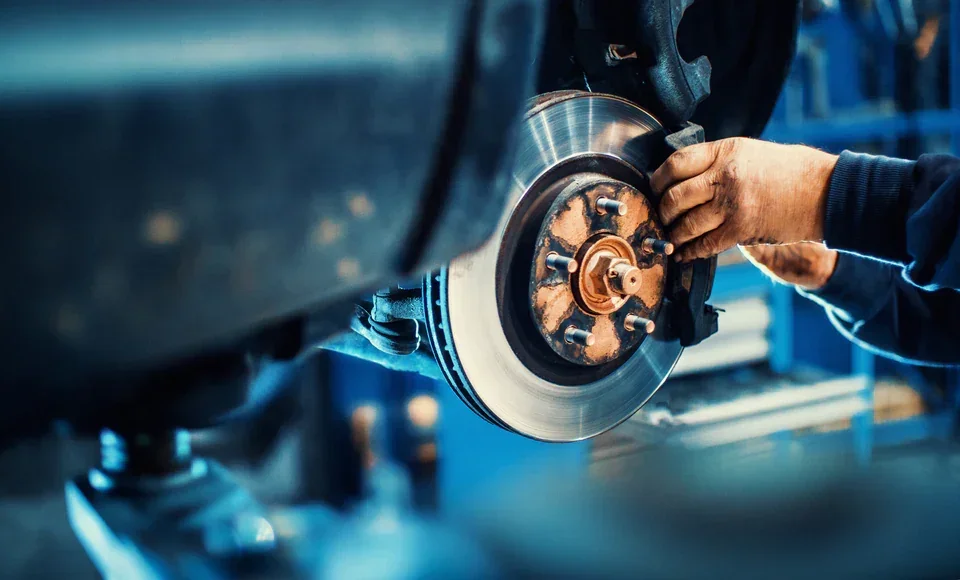
Technician inspecting a vehicle brake rotor and caliper during an automotive brake repair service.

Brakes aren’t some elusive mechanical enigmas. If you've ever wondered what's happening when you press the brake pedal, it’s easier to understand than you think. Brakes are one of the most important safety systems on your vehicle, yet most drivers know very little about how they work. This FAQ breaks down the key components that make up your brakes so you can feel more confident the next time you schedule service, and just driving around Fargo, North Dakota. 

What Are the Main Components of Your Brakes? 

Your brakes are made up of several interconnected parts that work together to slow and stop your vehicle. Understanding each one can help you recognize warning signs before they turn into bigger problems. Here's a look at the most common components you should know. 

What Are Brake Pads? 

Brake pads are the friction material that clamps against the rotor to slow your vehicle. Over time, brake pads wear down and need to be replaced. Most pads include a wear indicator that creates a squealing sound when the material gets too thin, which is your cue to schedule a service appointment. If you hear grinding, like metal on metal, they may be completely worn away and are contacting the rotors.

What Are Brake Rotors? 

Rotors are the large metal discs that your brake pads press against when you apply the brakes. They absorb and dissipate heat generated during braking. Rotors can warp or develop grooves over time, which may cause vibration or pulsing in the brake pedal. Depending on their condition, rotors can sometimes be resurfaced, but in many cases, replacement is the better long-term solution. 

What Is the Brake Caliper? 

The caliper is the component that houses the brake pads and uses hydraulic pressure to squeeze them against the rotor. Think of it like a clamp. Calipers can seize up or develop fluid leaks over time, which can cause uneven braking or a vehicle that pulls to one side. Keeping calipers in good working order is essential to safe, reliable stopping. 

What Is Brake Fluid? 

Brake fluid is the hydraulic fluid that transfers force from your brake pedal through the system to the calipers. It's easy to overlook, but it plays a critical role in your brakes performing consistently. Brake fluid can absorb moisture over time, which lowers its boiling point and reduces effectiveness. It should be inspected and replaced according to your vehicle's maintenance schedule. 

What Are Brake Lines and Hoses? 

Brake lines and hoses carry brake fluid from the master cylinder to the calipers at each wheel. Metal brake lines run along the frame of the vehicle, while flexible rubber hoses connect to the wheels, which move with steering and suspension. Cracks, corrosion, or leaks in these components can lead to brake failure, so they should be inspected regularly—especially in climates where road salt is common, like in Fargo, ND. 

What Is the Master Cylinder? 

The master cylinder is where brake pressure originates. When you press the brake pedal, it pushes a piston inside the master cylinder, which sends pressurized fluid through the brake lines. If the master cylinder fails or develops a leak, you may notice a soft or spongy pedal feel. This is one of the more critical components in the system and should be addressed promptly if issues arise. 

Visit Lunde Mazda of Fargo for Brake Service 

Your brakes are too important to ignore. Whether you're noticing unusual noises, a pulling sensation, or a change in pedal feel, getting your brakes inspected by a qualified technician here in Fargo, ND, is the smart move. If you have more questions from this FAQ or are ready to schedule service, the team at Lunde Mazda of Fargo is here to help. Visit us at mazdaoffargo.com to book your appointment today. 
Posted in:

Related Posts

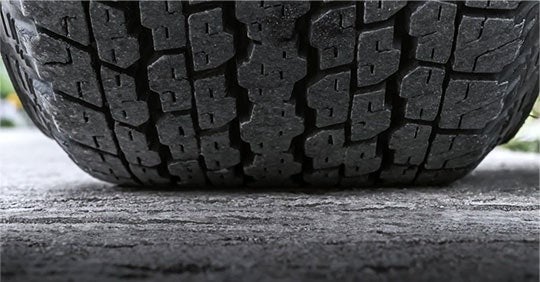
Close-up of a vehicle tire tread contacting the road, highlighting tread depth and tire condition.

Mazda Maintenance Tips Every Driver Should Know

Owning a Mazda is a rewarding experience but keeping it running at its best takes consistent attention. Regular Mazda maintenance is one of the simplest ways to protect your investment, extend the life of your vehicle, and make sure every drive feels as good as the first. Routine Services You Shouldn't Skip When it comes to Mazda maintenance, a few core services form the foundation of a healthy vehicle. An oil change is at the top of that list. Fresh oil keeps your engine lubricated, reduces heat buildup, and helps prevent long-term wear. Depending on your model and driving habits, Mazda recommends checking your oil regularly and following the service intervals outlined in your owner's manual. Beyond the oil change, your brakes deserve just as much attention. Brake pads wear down over time and ignoring early warning signs - like squealing or a soft pedal feel - can lead to more costly repairs down the road. Having your brakes inspected at each service visit is a straightforward way to catch issues early. Tires, Fluids, and Filters Mazda maintenance goes beyond just the engine and brakes. Tire rotations help ensure even tread wear, which improves handling and extends tire life. Checking tire pressure regularly is equally important, especially during temperature swings common in the Fargo, ND area. Fluid levels - including coolant, brake fluid, and transmission fluid - should be checked and topped off as needed. Cabin air filters and engine air filters also play a role in keeping your vehicle performing efficiently. These are easy items to overlook, but they make a noticeable difference in how your Mazda drives day to day. Following Your Mazda's Service Schedule Every Mazda comes with a recommended service schedule designed to keep your vehicle in top shape. Following that schedule consistently helps your Mazda deliver the reliable, responsive performance the brand is known for. If you're unsure where your vehicle stands, your service department can pull up your history and recommend what's due next. Mazda has been recognized as the Safest New-Car Brand by Consumer Reports, and that commitment to quality extends to how each vehicle is built to be maintained. Staying current on service helps you get the most out of those built-in safety and performance features. Visit Your Local Mazda Service Team Taking care of your Mazda maintenance doesn't have to feel like a chore. Scheduling regular service - including routine oil changes and brake inspections - is straightforward when you have a trusted team on your side. Visit Lunde Mazda of Fargo online at mazdaoffargo.com to schedule your next service appointment and keep your Mazda performing at its best for years to come.

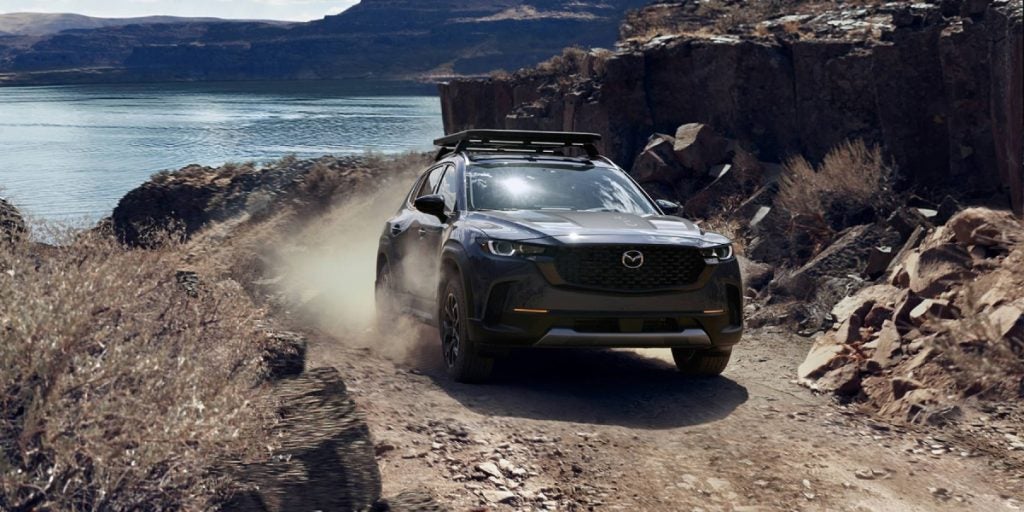
A dark SUV kicks up dust while driving along a rocky lakeside trail.

Mazda CX-50: Off-Road Capability That Feels Right at Home in Fargo

Some cars don’t look like they're ready to go outside. Others look forward for the pavement to end. The Mazda CX-50 is one of these cars. It doesn't make its intentions clear with over-the-top styling or extra weight. Instead, it has a certain coolness about it, as if it were made for real terrain. In Fargo, ND, where the roads go from smooth asphalt to snow-covered lanes and beyond, you quickly notice that coolness. Engineered Traction That Changes with You Mazda's i-Activ AWD system is what makes the CX-50 so useful. It works all the time, keeping an eye on inputs and changing the torque distribution between the front and rear wheels. The effect is small, but the benefit is clear. Grip builds up over time, with no sudden changes or breaks. The standard 2.5L engine makes 187 hp, but there is also a Turbocharged version that makes up to 256 hp. Both work well with the chassis and provide steady, controlled acceleration that works well on mixed terrain. Drive modes make it even more flexible. Mud, sand, and snow settings change the throttle response and traction control, so the CX-50 can move more confidently over surfaces that change from one mile to the next. In Fargo winters, that flexibility is something you use every day instead of just sometimes. Design with a Purpose The CX-50 has a wider stance than most Mazda SUVs, which makes it easier to drive on uneven ground. With a ground clearance of up to 8.6 inches, it can easily go off-road without any problems. The outside looks strong and quiet. The protective cladding, low roofline, and clean proportions make something that looks both elegant and strong. It doesn't lean too far in either direction. The design inside is based on the same idea. The materials feel strong and were picked for use, not display. With the back seats down, the cargo space is up to 56.3 cubic feet, which is enough room for everything from outdoor gear to everyday errands without any problems. Ability That Works with a Busy Schedule The CX-50 is good for people who like to go between town and trail. Roof rails can hold bikes, kayaks, or cargo carriers. Towing capability makes it even more useful because it lets drivers bring more than just what fits inside. The best part is how easily it changes roles. It stays steady on the highway, but once the surface changes, it settles into a steadier rhythm. Suspension tuning is important here because it keeps the ride under control without making it feel stiff on rough ground. Drivers often say that it feels predictable off-road. There is no room for guesswork. The inputs are clear, and the car reacts in a way that makes you feel safe instead of needing your attention. Take the CX-50 Where It Belongs You can't tell how good a car like the Mazda CX-50 is just by looking at its specs. It shows itself in the little things. A gravel road that feels more stable. A chilly morning that seems easier to handle. A drive on the weekend that goes a little longer without stopping. Come to Lunde Mazda in Fargo and take the CX-50 out for a test drive to see what it can do. Not just a quick drive, but something that shows how you really use it. That's where you can see what kind of vehicle it is and where it starts to make sense.

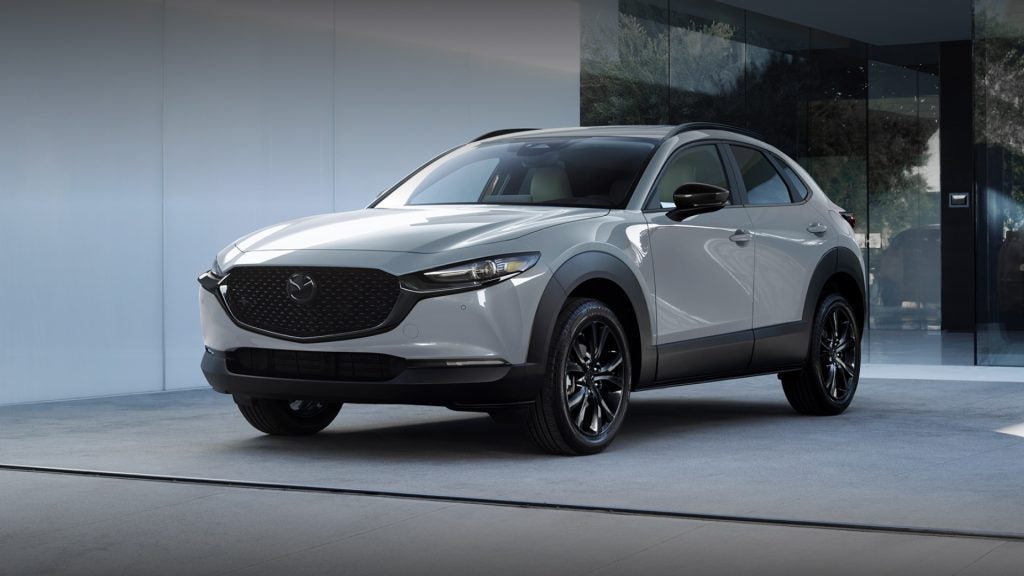
A white Mazda CX-30 sits in a modern glass-walled showroom with sleek, minimalist design.

Mazda vs. Honda: Which Brand Offers Better Value

You can look at Mazda and Honda on paper and come away thinking they’re basically the same thing. Reliable, sensible, and good at what they do. Then you drive them back-to-back and realize they’re chasing slightly different ideas. One leans toward feelings. The other leans toward function. Value depends on which one matters more to you around Fargo; where daily driving can swing from calm commutes to less predictable conditions in a hurry. Design and Interior Quality: Mazda Pushes Upmarket Mazda has been quietly moving up the ladder. The design is sharper, more deliberate, and inside, it shows. Models like the 2026 Mazda CX-90 and Mazda3 Sedan feel like they were designed with intent, not just assembled. Materials are a step above what you expect at this price point. Available with Nappa leather, cleaner layouts, and controls that feel properly weighted. It is not trying to be flashy, just well executed. Honda takes a different route. The Accord and CR-V are straightforward, spacious, and easy to live with. Everything is where you expect it. It works. It just does not try to impress you while doing it. If interior quality is part of your definition of value, Mazda has the edge. Driving Experience: Where Mazda Pulls Ahead This is where the gap becomes obvious. Mazda still builds cars for people who enjoy driving, even a little. Steering has weight. The chassis feels connected. From the Mazda3 Hatchback to the CX-50 Hybrid, there is a consistency to how these vehicles respond that makes every day driving feel more deliberate. Honda is competent. The Civic and the CR-V are smooth and efficient. But they do not invite you to take the long way home. They get the job done and move on. If driving matters to you, Mazda makes a stronger case. Reliability: Closer Than It Used to Be Honda built its reputation on reliability, and that still holds. Low maintenance, predictable ownership, nothing surprising. Mazda has caught up. Recent reliability rankings have consistently placed it near the top, thanks in part to simpler powertrains and a focus on refinement over complexity. Models like the CX-5 and CX-30 have proven durable and relatively inexpensive to maintain. The gap is not what it used to be. In practical terms, both brands are safe bets for long-term ownership in Fargo. Cost of Ownership: Where Value Gets Interesting Mazda tends to bundle more into the initial purchase. Features that feel optional elsewhere often come standard, especially in areas like safety and interior materials. Fuel efficiency is competitive across both brands, especially with hybrid options like the CX-50 Hybrid and CR-V Hybrid. The difference shows more in how much you get for the price rather than the price itself. Honda holds steady with resale value and consistency. Mazda counters with a slightly more premium feel for similar money. That trade-off is where the decision usually lands. See the Difference in Fargo Mazda and Honda both make strong cases. One prioritizes engagement and design. The other focuses on usability and consistency. The real difference shows up when you drive them. How they steer, how they feel over rough pavement, how the interior comes together after a few minutes behind the wheel. If you are in Fargo, ND, spending time in both is the quickest way to figure out which one aligns with what you value in a vehicle.