

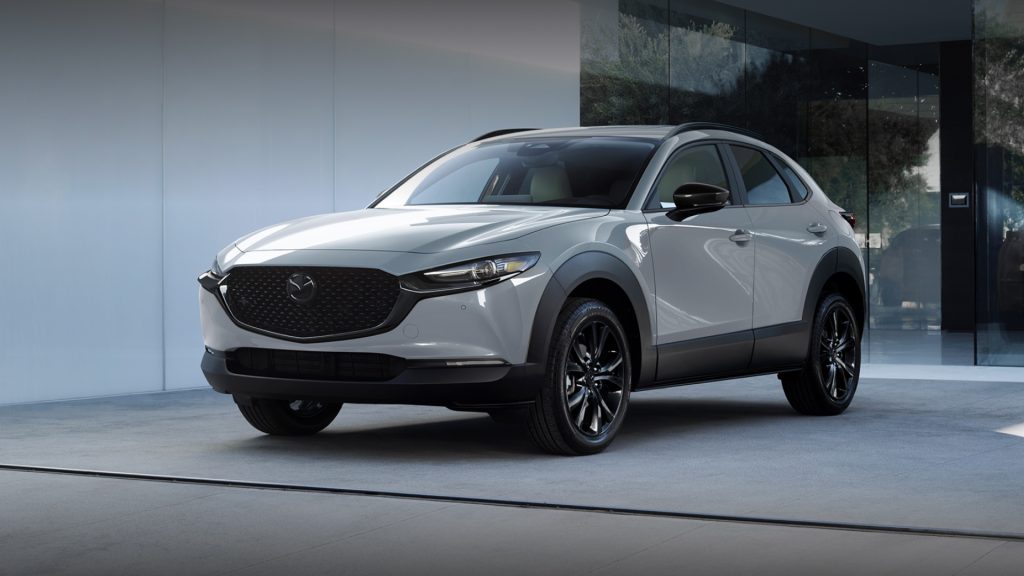
You can look at Mazda and Honda on paper and come away thinking they’re basically the same thing. Reliable, sensible, and good at what they do. Then you drive them back-to-back and realize they’re chasing slightly different ideas.
One leans toward feelings. The other leans toward function. Value depends on which one matters more to you around Fargo; where daily driving can swing from calm commutes to less predictable conditions in a hurry.
Design and Interior Quality: Mazda Pushes Upmarket
Mazda has been quietly moving up the ladder. The design is sharper, more deliberate, and inside, it shows. Models like the 2026 Mazda CX-90 and Mazda3 Sedan feel like they were designed with intent, not just assembled.
Materials are a step above what you expect at this price point. Available with Nappa leather, cleaner layouts, and controls that feel properly weighted. It is not trying to be flashy, just well executed.
Honda takes a different route. The Accord and CR-V are straightforward, spacious, and easy to live with. Everything is where you expect it. It works. It just does not try to impress you while doing it.
If interior quality is part of your definition of value, Mazda has the edge.
Driving Experience: Where Mazda Pulls Ahead
This is where the gap becomes obvious. Mazda still builds cars for people who enjoy driving, even a little.
Steering has weight. The chassis feels connected. From the Mazda3 Hatchback to the CX-50 Hybrid, there is a consistency to how these vehicles respond that makes every day driving feel more deliberate.
Honda is competent. The Civic and the CR-V are smooth and efficient. But they do not invite you to take the long way home. They get the job done and move on.
If driving matters to you, Mazda makes a stronger case.
Reliability: Closer Than It Used to Be
Honda built its reputation on reliability, and that still holds. Low maintenance, predictable ownership, nothing surprising.
Mazda has caught up. Recent reliability rankings have consistently placed it near the top, thanks in part to simpler powertrains and a focus on refinement over complexity.
Models like the CX-5 and CX-30 have proven durable and relatively inexpensive to maintain. The gap is not what it used to be. In practical terms, both brands are safe bets for long-term ownership in Fargo.
Cost of Ownership: Where Value Gets Interesting
Mazda tends to bundle more into the initial purchase. Features that feel optional elsewhere often come standard, especially in areas like safety and interior materials.
Fuel efficiency is competitive across both brands, especially with hybrid options like the CX-50 Hybrid and CR-V Hybrid. The difference shows more in how much you get for the price rather than the price itself.
Honda holds steady with resale value and consistency. Mazda counters with a slightly more premium feel for similar money.
That trade-off is where the decision usually lands.
See the Difference in Fargo
Mazda and Honda both make strong cases. One prioritizes engagement and design. The other focuses on usability and consistency.
The real difference shows up when you drive them. How they steer, how they feel over rough pavement, how the interior comes together after a few minutes behind the wheel.
If you are in Fargo, ND, spending time in both is the quickest way to figure out which one aligns with what you value in a vehicle.
Connect with us


Recent Blog Entries
- What to Do When Your Oil Light Is On in Your Mazda
- Ownership Costs Matter More Than Purchase Price: Why Mazda Makes a Strong Long-Term Choice
- Mazda SUV Tire Care: Small Maintenance Habits That Deliver Big Results
- Why Regular Multi-Point Inspections Matter for Your Mazda
- Top Features of the Mazda 3 That Make It Worth a Closer Look